
Backyard Drainage Solutions Sacramento Homeowners Need
A Sacramento backyard can look perfectly level in July and reveal every drainage problem during the first heavy winter rain. Water pools beside a patio, runs toward the house, softens planting beds, or turns the path from the gate into mud. Effective backyard drainage solutions Sacramento homeowners choose are not about adding one drain and hoping for the best. They start with understanding where water comes from, where it collects, and where it can safely go.
At Palapa Pros-Landscape Construction, we plan drainage as part of the full outdoor environment. A patio, retaining wall, pergola, synthetic grass area, or outdoor kitchen should make the yard more usable, not create a place for water to get trapped. The right answer depends on the grade, soil, roof runoff, irrigation, hardscape layout, and the way your family uses the space.
Start With the Water Path, Not the Product
Homeowners often ask whether they need a French drain, catch basin, or new yard drains. Those can be good tools, but none should be selected before the water path is clear. Drainage work that ignores the overall grade may move water a few feet and leave the real problem untouched.
A proper site review looks at the entire property. We identify low areas, the slope of existing concrete, roof downspout discharge points, irrigation overspray, compacted soil, and any places where water is moving toward the foundation. We also consider neighboring properties. Water cannot simply be redirected across a fence line because it is inconvenient in your own yard.
Sacramento-area soils add another layer to the decision. Many properties have heavy clay soils that drain slowly after a storm. A shallow low spot may hold water longer than expected even when the yard appears to have a modest slope. In other neighborhoods, older patios or walkways have settled over time and now direct water back toward the home.
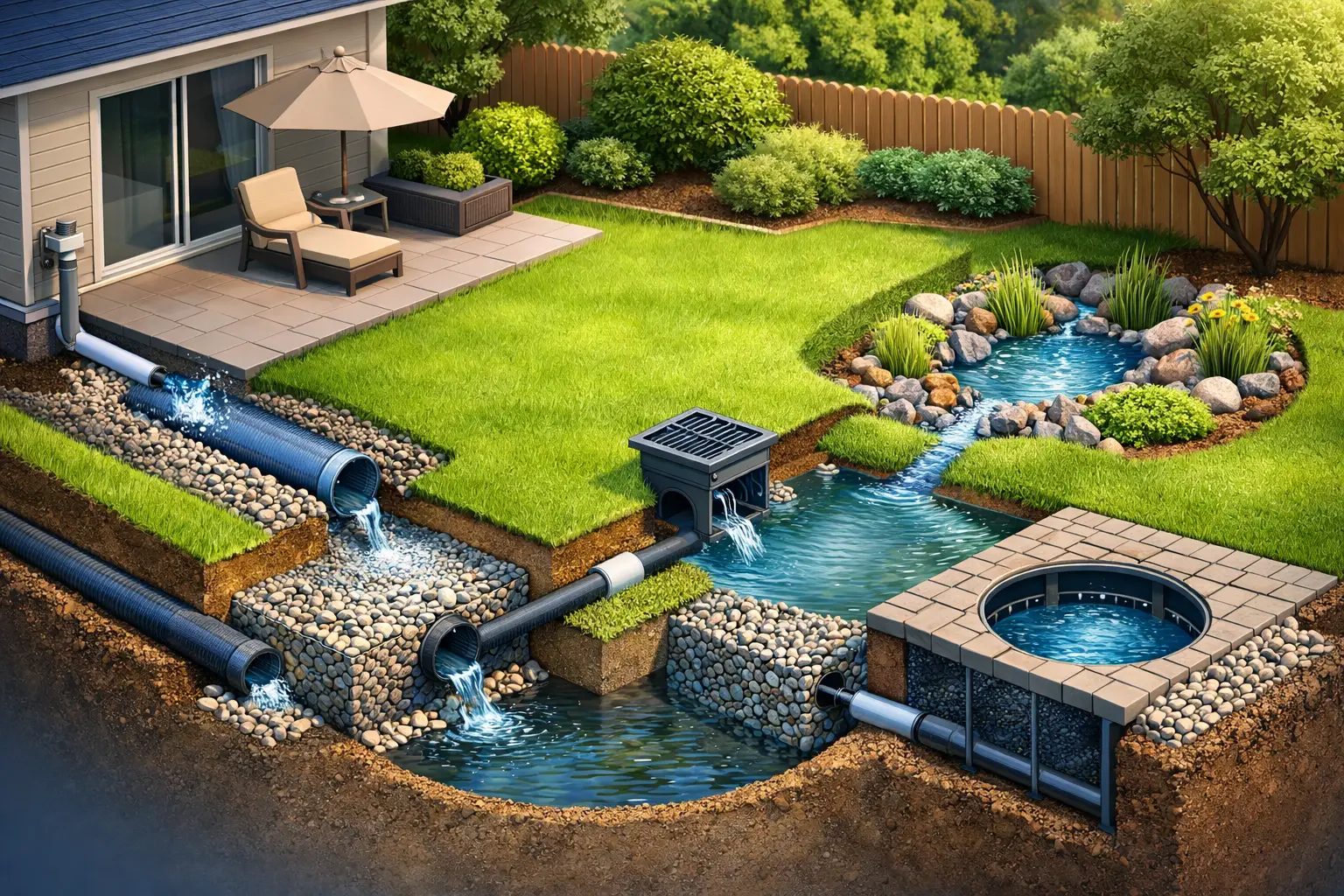
The goal is straightforward: collect water where needed, establish positive drainage away from structures, and discharge it to an appropriate approved location. That may mean a combination of grading, surface drains, underground piping, and hardscape adjustments rather than one single fix.
Backyard Drainage Solutions Sacramento Properties Commonly Need
Regrading for positive drainage
Regrading is often the foundation of a lasting drainage plan. Soil is shaped so surface water naturally moves away from the house, patio cover footings, retaining walls, and other improvements. In a simple yard, careful regrading may solve much of the issue without adding visible drainage hardware.
There are limits. A property with very little elevation change, a tight side yard, or a lower backyard may not have enough fall to rely on grading alone. In those cases, grading still matters, but it works with a collection and conveyance system.
French drains for subsurface moisture
A French drain is a perforated pipe set in clean drainage rock and wrapped with filter fabric. It is designed to collect groundwater and water moving through the soil, then carry it away through solid outlet piping. This can help behind a retaining wall, along a persistently wet planting area, or beside a slope where subsurface water is part of the problem.
A French drain is not always the right choice for water running across the top of a patio or driveway. Surface water needs a surface collection point. Installing a French drain where a channel drain is needed is a common reason homeowners keep dealing with puddles after paying for drainage work.
Catch basins and area drains for low spots
Catch basins and area drains collect surface runoff at known low points. They are useful near a patio corner, at the base of a slope, around a downspout discharge area, or in a landscape bed that receives water from several directions. The basin connects to solid drain pipe that carries water away.
These systems need access for periodic cleaning. Leaves, bark, and landscape debris do not disappear once they enter a grate. A well-built drainage system accounts for maintenance with properly placed grates and cleanouts instead of burying every connection where it cannot be reached.
Channel drains at patios, walkways, and doors
A linear channel drain is often the right solution where concrete, pavers, or tile create a hard surface that sheds water toward a building. It sits flush with the finished surface and intercepts runoff before it reaches a doorway, wall, or covered patio area.
The drain itself is only one part of the job. The surrounding hardscape must be set to drain toward it with the correct slope, and the outlet pipe must have a reliable path. This is why drainage and hardscape construction should be coordinated from the beginning, not treated as separate projects after the concrete is already in place.
Downspout extensions and roof runoff control
Roof water can overload a small backyard fast. A downspout dumping beside a foundation or onto a narrow side yard can create erosion, standing water, and staining on concrete. Extending downspouts into a buried solid pipe can move that concentrated flow to a better discharge point.
This work must be planned carefully around existing utilities, gates, walkways, and landscaping. It also needs to work when the pipe is full during a real storm, not just during a hose test on a dry afternoon.
Drainage Should Be Built Into the Backyard Plan
The best time to solve drainage is before new improvements go in. If you are planning a palapa, patio cover, paver patio, outdoor kitchen, retaining wall, synthetic grass installation, or hot tub site, drainage belongs in the early layout conversation.
For example, a new patio should have intentional slope and a clear runoff route. A retaining wall needs drainage behind it so water pressure does not build up in the soil. Synthetic grass requires a stable, properly prepared base and perimeter details that do not trap runoff against concrete. An outdoor kitchen may need a nearby drain location so cleaning water and rainwater do not collect beneath cabinets or around utility connections.
Trying to correct drainage after the finish surfaces are installed can mean cutting concrete, removing pavers, disturbing landscaping, and paying twice for labor. That does not mean every backyard needs an extensive drainage system. It means the plan should account for water before the finishes make access difficult.
Avoid Quick Fixes That Move the Problem
Some drainage approaches look inexpensive because they address only what is visible. Adding topsoil to a low area without checking surrounding elevations can send water toward the house. Filling a muddy section with gravel may create a cleaner-looking puddle rather than a drained yard. Directing a pipe toward the neighbor’s fence can create a liability and a strained relationship.
Another mistake is relying on landscape fabric as a drainage solution. Fabric can help separate soil from drainage rock in the right application, but it does not create slope, carry runoff, or replace properly sized pipe. Similarly, decorative rock in a dry creek bed can manage surface flow only when the grade, depth, and outlet are planned to handle actual runoff.
Good drainage work is usually less dramatic than a quick fix. The final system may be mostly underground, with carefully placed grates and a yard that simply dries as it should. That is the result homeowners want: an outdoor space that works after rain without calling attention to the drainage system itself.
What a Dependable Drainage Project Looks Like
A reliable contractor should explain the scope in plain language before work begins. You should know what areas will be excavated, where pipes and basins will be installed, what finished grades are expected, how surfaces will be restored, and what the discharge plan is. If drainage work affects a major hardscape build or requires permits, that should be addressed before construction starts.
Site care matters here. Drainage installation involves trenching, soil movement, rock, pipe, and equipment. A crew should protect the areas that are not being rebuilt, keep the work organized, and avoid leaving a half-finished trench exposed longer than necessary. Clear communication matters just as much when an existing condition changes the plan, such as an unexpected utility line, old concrete footing, or shallow pipe.
Before the project is closed out, the system should be checked for flow and the finished yard should be reviewed as a whole. Drainage cannot be judged only by whether water enters a basin. It needs to leave the collection point, travel through the intended route, and discharge without creating a new issue elsewhere.
Plan Before the Rain Returns
If your yard has standing water, erosion, damp areas near the foundation, or runoff crossing a patio, do not wait for the next storm to confirm there is a problem. Walk the property while the issue is visible, take note of where water starts and where it ends, and have a builder assess the complete site before adding new outdoor improvements. A well-planned drainage system protects the work you invest in and gives you a backyard you can use when Sacramento weather finally changes.
