
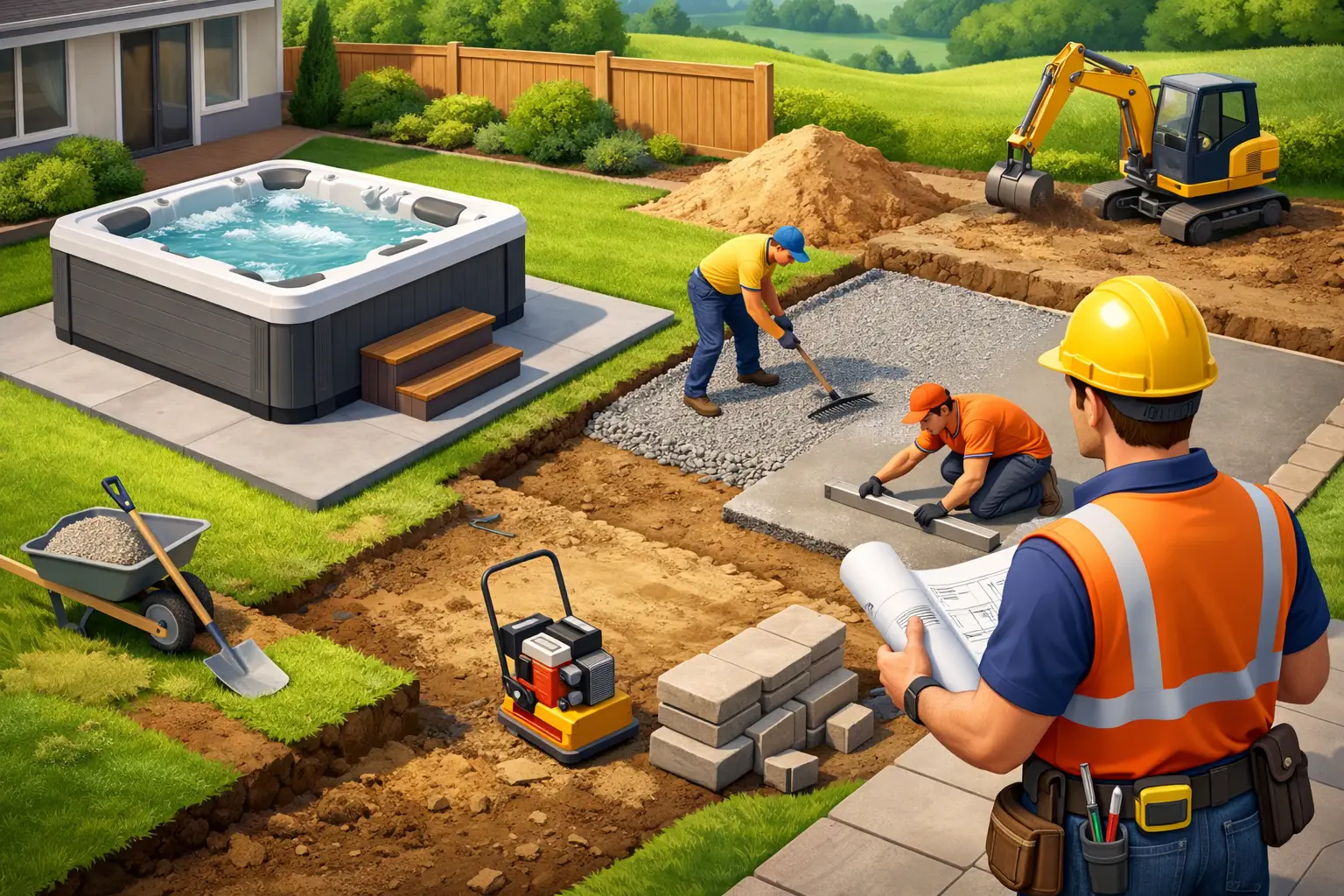
Choosing a Hot Tub Site Preparation Contractor
A hot tub can look like a simple backyard addition until delivery day exposes what is underneath it. The spa needs a level, load-bearing base. It needs safe electrical planning, a clear delivery route, drainage that does not create a muddy problem, and enough room for people to service and enjoy it. A qualified hot tub site preparation contractor handles those conditions before the truck arrives, not after a new patio, fence, or lawn has to be torn back out.
For Sacramento-area homeowners, site preparation also has to account for hot summers, winter rain, varied soil conditions, and the way the spa fits into the rest of the yard. A good installation is not just about placing a tub on a slab. It is about building an outdoor area that works reliably for years.
What a Hot Tub Site Preparation Contractor Should Handle
The right contractor starts with an on-site look at the property. They should ask where the spa will sit, how it will get there, where power will come from, how water will drain, and how the area will connect to existing patios, shade, landscaping, or outdoor entertaining features.
A complete scope commonly includes site layout, demolition or clearing, excavation, grading, compacted base material, concrete or paver work, drainage improvements, and coordination around electrical requirements. Depending on the project, it may also include steps, walkways, privacy walls, retaining work, lighting provisions, or a patio cover and shade structure.
The key word is coordination. Homeowners should not have to guess whether the concrete installer accounted for the electrician’s route or whether the landscaper will damage a newly prepared spa pad. One organized team and one clear scope reduce those gaps.
The Base Must Carry More Than the Spa Shell
An empty hot tub is heavy. Once it is filled with water and occupied, the load increases substantially. The base needs to be flat, stable, and sized correctly for the specific unit, including its equipment access requirements.
A reinforced concrete pad is a common choice because it provides a durable, easy-to-clean surface. In other situations, a properly engineered deck, a paver system over a well-compacted base, or another manufacturer-approved foundation may make sense. The right answer depends on the spa model, soil, elevation changes, and the overall design of the yard.
What should not happen is placing a spa on loose gravel, an uneven old patio, or a section of lawn that looks firm in summer but shifts after rain. Saving money on the foundation can create settlement, poor drainage, cracked hardscape, or a difficult warranty conversation later.
Drainage Is Part of the Installation, Not an Extra
A spa area gets wet. Between splash-out, rain, cleaning, and occasional draining, water needs a planned path away from the home and away from the base. Standing water beside a hot tub is more than an annoyance. It can soften soil, stain hardscape, create slipping hazards, and make the area unpleasant to use.
Proper grading often solves much of the problem, but some yards need more. A contractor may recommend drainage rock, a channel drain, a catch basin, or adjustments to surrounding patio elevations. On sloped properties in Folsom, El Dorado Hills, Lincoln, and similar areas, retaining and drainage planning may need to happen together.
Ask where water will go before work begins. A clear answer is better than a vague promise to make it drain later.
Access Planning Prevents Expensive Surprises
The spa has to reach its final location. That may sound obvious, but access is one of the most overlooked parts of a hot tub project. Some units can be rolled through a side yard with enough clearance. Others require a crane lift over a house, fence, or garage.
A site visit should identify gate widths, side-yard clearance, overhead power lines, rooflines, trees, irrigation components, and soft areas where delivery equipment could damage the property. If a fence section must be removed and rebuilt, that should be identified in the scope. If a crane is likely, the contractor should help plan the landing area and protect the finished yard around it.
This is also where a full-service outdoor contractor brings practical value. If access requires a gate modification, new pathway, fence repair, or landscape restoration, the work can be planned as part of the project rather than left as a last-minute scramble.
Electrical and Utility Coordination Needs Clear Boundaries
Most hot tubs require a dedicated electrical circuit and must be installed according to applicable code and manufacturer requirements. The exact requirements vary by unit and property, so the electrical scope should be defined early. Homeowners need to know who is handling permits if required, who is providing the electrical work, where the disconnect will be located, and what trenching or restoration is included.
The site preparation contractor does not need to perform every specialty task directly to manage the project well. What matters is clear coordination and accountability. The concrete pad should not be poured over a route that needs to be trenched next week. Finished landscaping should not be installed before utility work is complete.
Water access also deserves a conversation. You may only need a nearby hose bib for filling and basic maintenance, but the route from the home to the spa should be convenient and should not force hoses across a main walkway every time the tub needs attention.
Build for How You Will Actually Use the Space
A hot tub placed in the farthest corner of the yard may be technically possible, yet still be a poor daily-use decision. Think about the walk from the house on a cold evening, where towels will go, whether guests have a safe path, and how much privacy you want when neighboring homes are close.
A well-planned spa area can include a durable landing pad, non-slip walkways, integrated seating, low-voltage lighting, privacy planting, or a solid shade structure. In Sacramento’s heat, shade can make the surrounding patio far more comfortable during the day. In cooler months, a covered transition from the home can make a spa feel like part of the property rather than a separate destination.
There are trade-offs. Dense privacy landscaping can look good but may drop leaves into the water. A fully enclosed structure can feel private but may limit service access or ventilation. Built-in benches are useful for towels and conversation, but they need to be placed far enough from equipment panels. A contractor who asks how you plan to use the space can help balance those choices before materials are installed.
Questions to Ask Before You Hire
A dependable hot tub site preparation contractor should be comfortable discussing practical details, not just quoting a pad size. Before signing an agreement, ask how the base will be built, how drainage will be addressed, what access challenges were identified, and which parts of the work are included or excluded.
You should also ask about the project sequence. A clear sequence might include layout, demolition, excavation, base preparation, utility coordination, hardscape installation, spa delivery, and final landscape restoration. Defined steps make it easier to understand what happens when weather, delivery timing, or a manufacturer change affects the schedule.
Pay attention to how the contractor communicates during the estimate stage. Do they show up when promised? Is the scope written clearly? Do they explain why a recommendation is being made? Those habits usually carry into construction. Homeowners do not need more vague allowances, missed calls, or a yard left open longer than necessary.
Choose a Team That Can Finish the Entire Area
The spa pad is only one piece of the backyard. If the project also involves a patio extension, pergola, retaining wall, synthetic grass, planting, or outdoor kitchen, it makes sense to plan the pieces together. That avoids mismatched elevations, awkward walkway transitions, and having to remove finished work to install something that should have been planned first.
Palapa Pros-Landscape Construction approaches these projects as part of a usable outdoor environment. The focus is on organized site planning, durable construction, clean jobsites, and direct communication from the first walk-through through final cleanup. A spa should sit on a base that performs, but the area around it should also feel intentional.
Before choosing a location, stand in the yard at the time you expect to use the hot tub most. Notice the sun, wind, privacy, drainage, and walk from the house. That ten-minute check can lead to better decisions than choosing the first open corner of the property.
