
Retaining Wall Contractor Sacramento Homeowners Trust
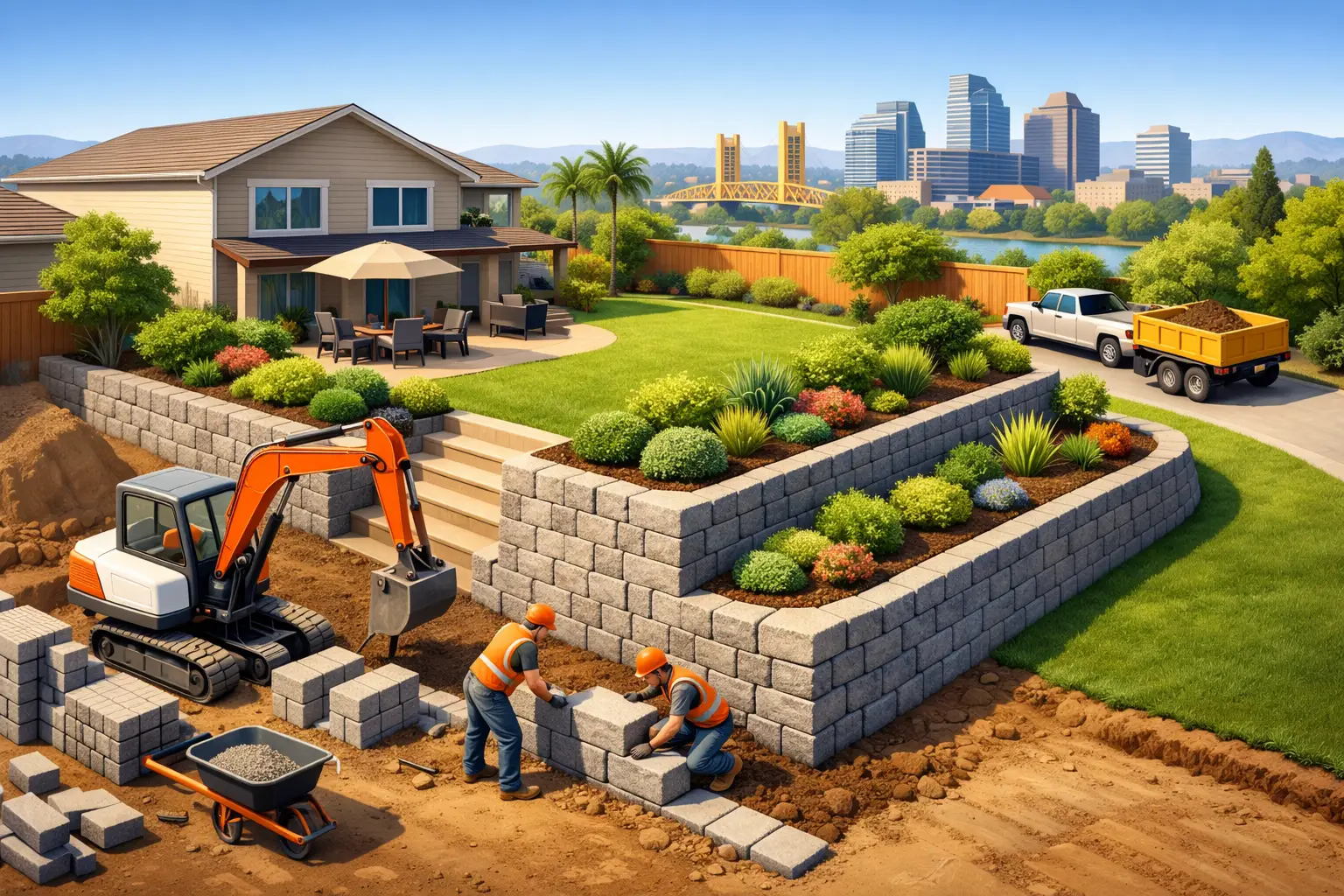
A sloped Sacramento backyard can look manageable until a winter storm sends water across the patio, soil starts washing from a planting bed, or a fence begins to lean. A retaining wall contractor Sacramento homeowners hire should solve the grade problem at its source, not simply stack attractive block in front of it. The wall has to hold back soil, move water where it belongs, and fit the way you actually use the yard.
Retaining walls are often part of a larger outdoor plan. They can create a level patio area, define an outdoor kitchen zone, make room for synthetic grass, support a new shade structure, or turn an unused slope into accessible planting space. The best result comes from looking at the whole property before construction begins.
What a Retaining Wall Must Do
A retaining wall has a structural job. Soil is heavy, and it becomes significantly heavier when saturated. Pressure builds behind the wall over time, especially where irrigation, runoff, or poor drainage keeps the backfill wet. A wall that looks straight on installation day can bow, settle, crack, or fail if the base, drainage, reinforcement, and backfill are handled carelessly.
That is why wall material is only one part of the decision. Concrete block systems, natural stone, poured concrete, and timber each have a place, depending on wall height, site conditions, design goals, and budget. A low decorative garden border does not require the same engineering or construction approach as a wall supporting a raised yard, driveway edge, pool area, or neighboring grade.
In Sacramento and surrounding communities, expansive soils, established tree roots, irrigation patterns, and uneven lots all affect the plan. The right solution depends on what is behind the wall, where water travels during rain, and what the homeowner plans to build around it next.
What to Expect From a Retaining Wall Contractor in Sacramento
A reliable contractor starts by walking the site and asking practical questions. Where does the water go now? Is the wall intended to create usable level space? Will it support a patio, fence, landscaping, or spa area? Are there gates, access paths, utilities, or drainage outlets that need to remain functional?
Those details should turn into a clear scope before work begins. Homeowners should understand the wall location, approximate height, material selection, excavation needs, base preparation, drainage approach, backfill, cleanup, and any related landscape or hardscape work. Clear pricing does not mean every site condition can be predicted perfectly, but it does mean the contractor explains what is included and communicates promptly if field conditions require a change.
A well-managed project also respects the property during construction. Retaining wall work involves excavation, soil movement, aggregate, equipment, cutting, and deliveries. Organized staging, daily cleanup, protected access areas, and reliable attendance matter just as much as the visible finish. You should not have to chase down the people responsible for a project in your own yard.
Drainage Is Not an Add-On
Water management is one of the most common reasons retaining walls succeed or fail. Drainage behind a wall may include clean drain rock, filter fabric where appropriate, perforated drainpipe, and a planned outlet path. Surface grading above and below the wall also needs attention so water does not collect where it should be moving away.
The exact drainage design depends on the site. A short planter wall may need a straightforward approach, while a taller wall holding back a broad slope may require more involved planning. The point is simple: if a contractor does not discuss where the water will go, the wall plan is incomplete.
Permits and Engineering Depend on the Project
Not every retaining wall has identical permit or engineering requirements. Height, surcharge loads, property lines, nearby structures, and local jurisdiction requirements can change what is needed. A wall that supports a driveway, fence, slope, or building area can carry forces beyond the soil itself.
A licensed contractor should identify when permits, engineering, or additional review may be required and coordinate the work accordingly. This protects the homeowner from treating a structural project like a weekend landscape upgrade. It also helps prevent costly corrections after work has already started.
Planning the Wall Around How You Live Outside
The strongest retaining wall projects do more than address elevation. They make the yard easier to enjoy. A wall can create the level footprint needed for a paver patio, establish a transition from a covered outdoor area to a lawn, or provide integrated planting areas that soften a hardscape design.
For homeowners considering several improvements, completing the site plan first can save money and rework. For example, it makes little sense to install a finished retaining wall and patio only to excavate beside them later for drainage, electrical runs, an outdoor kitchen, or a hot tub pad. Coordinated construction keeps elevations, drainage, access, and finishes working together.
Palapa Pros-Landscape Construction approaches these projects as part of the complete outdoor environment. That can mean pairing retaining wall construction with hardscapes, landscaping, artificial turf, patio covers, pergolas, shade structures, or a custom palapa. One coordinated team reduces the handoffs that often lead to mismatched elevations, damaged finishes, and unclear responsibility.
Questions Worth Asking Before You Hire
A contractor should be comfortable answering direct questions about the work. Ask how the base will be prepared, how drainage will be handled, what reinforcement is planned, and how the wall will connect with adjacent patios, fences, steps, or landscaping. Ask who will be managing the job, how changes are communicated, and what the jobsite will look like at the end of each workday.
It is also reasonable to ask about licensing, insurance, local experience, and whether the contractor has built walls comparable to yours. Photos can show finish quality, but conversation reveals whether the builder understands the practical work behind the finished face.
Be cautious with estimates that focus only on a price per square foot without discussing excavation, access, disposal, drainage, base material, reinforcement, or final grading. Two walls can have the same visible dimensions and very different construction needs. A lower bid is not a better value if the scope leaves out the parts that protect the wall over time.
When Repair May Work and When Replacement Makes More Sense
Some retaining wall problems can be addressed with localized repairs. Loose capstones, minor settlement in a small landscape border, damaged facing, or failed irrigation near the wall may be correctable without full replacement. The underlying base and drainage still need to be evaluated before cosmetic work is done.
A wall that is leaning, bulging, separating, cracking extensively, or showing ongoing erosion behind it may need a more complete solution. Covering the symptoms rarely fixes the pressure or water problem causing the movement. Replacement can feel like the larger expense upfront, but rebuilding correctly is often less costly than repeating patchwork repairs.
Build for the Next Season, Not Just the Reveal
Retaining wall construction is a foundation for the rest of the yard. The work should hold up through irrigation cycles, Sacramento heat, winter rain, and everyday use without creating drainage problems somewhere else on the property. That takes accurate planning, proper materials, and a crew that treats the hidden work with the same care as the visible finish.
If your yard has a slope, failing wall, or an outdoor project that needs a level starting point, begin with an on-site conversation about the property as a whole. A clear plan and a builder who shows up can turn a difficult grade into useful, durable space.
